Monday, December 6, 2021

Boats with problems...

Boats in the VolksCruiser budget zone are going to have problems or issues you’ll have to deal with. Just accept it as part of the territory, which is not always problematic. A sailboat with the right issues could very well be to your advantage.


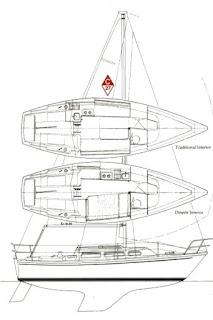
There’s a Catalina 27 with a broken mast that would make an excellent candidate for a junk rig conversion I’ve had my eye on. The current asking price is $2K. Finding a used mast and rigging will raise the cost more than you’ll want to spend. I’ll also point out that without a working rig you can make a lower offer that the seller should agree to.

Building a junk rig (spar, sail, and running rigging) is not that difficult or expensive. The cost is less than a new mast. So it makes sense to go with the junk rig rather than replace the original rig. The boat comes with a full set of C27 sails that should be easy to sell and cover some of the cost of the junk rig.

Adding the junk rig to the mix will make the C27 a better cruising boat and open up some space below by not having to store unused sails. A junk rig will also increase the value more than the cost of the new rig.

Which, I think most of you’ll agree, is a win/win situation.

More on problems that may actually be advantages in disguise soonish...


Sunday, November 28, 2021

$3K or less...

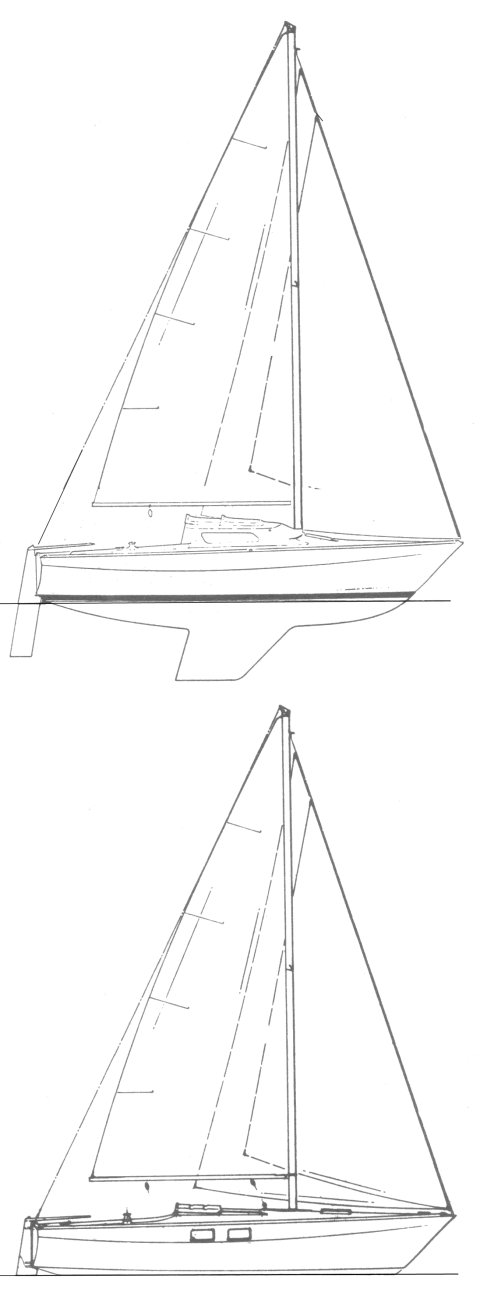
Yesterday I did a Craigslist search on some of my favorite VolksCruiser candidates one of which is the Bill Tripp designed Columbia 26 MK2. 


As it happens I found six of these boats for sale and all of them were selling for $3000 or less. The average price was just a kiss shy of $2000. Looking at my search today I saw another Columbia 26MK I had missed for an asking price of $3900 which appears to be a bit more of a turn key boat.

Obviously, a boat with an asking price of $1500 or $1700 (the two least expensive) is going to require some work but as there is not all that much to fix the expense would not be great or the work overly problematic. In my experience most of the work is more about cleaning and simple projects than anything difficult or expensive.

One thing to look out for is that the 26 MK 2 came in a normal and shoal draft version and I've always been partial to shoal draft where VolksCruisers are concerned as it opens up potential for less expensive moorings as well as out of the way anchorages..

Also, it's best to keep in mind that there is almost always a difference between what the seller is asking for and what the seller will actually accept.

Some more information on the Columbia 26MK2 can be found here.


Thursday, November 25, 2021

When a $175,000.00 boat is considered cheap-seats...

The current issue of Blue Water Sailing (not a magazine I read on a regular basis) has an article on "New Cruising Boats" and it seems that the cheapest boat listed is about $175,000.00 or so. Which, I'll admit, does seem in the cheap-seats when compared to the boats on the list over a million bucks.

Apparently, blue water cruising is an expensive pastime but still you'd think they'd be able to include a boat or two which someone who actually works for a living might actually be able to afford.

That being the case, for those considering going cruising in a bit more affordable VolksCruiserish boat how does one survive in a pastime that continues to gentrify at such an alarming manner?

Face it, the maritime press is now only interested in running articles that appeal to wealthy readers and high end companies because high end companies have big advertising budgets. Just about all of the marine magazines who were once full of articles about fixing up old boats, DIY projects, and cruising stories by folks on limited budgets are now doing puff pieces on million dollar cats and monohulls.

It's kinda depressing...

Which has me thinking that I really should do a series of twenty blue water capable production boats that have stood the test of time and can be bought by someone who's working for $15 bucks an hour.

Ya think?

More soon come...


Sunday, November 21, 2021

DIY and VolksCruising...

A couple of decades or so back while living in in St Thomas there was a really nice couple who'd bought a famous (it had featured in a movie with Bing Crosby) albeit semi-derelict Alden schooner sight unseen.

At the time I was working at a local marine consignment store and the couple came in often looking to buy needful items for their boat and pumping us for advice.

You know what they say about free advice.

The couple while knowing zilch about boats and on a shoestring budget still managed to do a lot of work on the boat and seemed to be on a roll when they made the mistake about bringing in a local rigger to help them with their rig.

A couple of weeks after they showed up with a shopping list provided by the rigger that, to me at least, was some kind of interesting. The first thing that caught my attention was that there were a lot of things that just did not belong on an old wooden schooner. So I asked  which boat the shopping list was for.

They answered that the rigger had laid out a whole new rig as he had access to one of the old America's Cup boats and could reuse some of their old rod rigging...

Now, St Thomas is a pretty small place and the rigger in question was somewhat infamous for doing bad jobs. He seldom actually did any real rigging work leaving that to his crew who were more or less clueless and paid sub-minimum wages. The clients, of course, paid $75 bucks an hour for each of those sub-minimum wage minions. So hardly surprising that a lot of projects turned into clusterfucks.

I pointed this out to the couple and recommended that they hit the local book store and buy The Riggers Apprentice by Brion Toss and that the book would answer all of their questions in getting their rig fixed right. Soon after they were DIYing the rig with a bit of help from Brion on the phone when needful.

Not too long after the boat was doing the daysail charter ting and earning money.

I mention this story because the marine trades in general are not your friend. Some are simply inept while others are, at best, just black hearted villains who will steal you blind. Whichever sort you're dealing with be assured that the only thing most care about is what's in your wallet.

Worse yet is the fact that far too often marine tradesmen work in concert with each other. For instance that nice helpful surveyor tells you your rig is shot and sends you to a rigger to sort out your problems. Sadly, far too often that surveyor didn't really find anything wrong and is going to receive a kickback or part of the damage that the rigger will inflict on your budget.

I'll point out that in this sort of scenario the too often used adage "You get what you pay for!" is true but in a very negative way.

So, the whole VolksCruiser vibe is really just about accessible knowledge and accumulating the needed skill-set to keep your boat running. Well that and avoiding dastardly assholes.

Larry and Lin Pardey pretty much coined the perfect VolksCruiser mantra when they said something along the lines of...

"If you can't fix it, it doesn't belong on your boat!"

Monday, November 15, 2021

a couple of thoughts on plywood...

I know everyone says that when using plywood aboard a boat that one should always use the best marine plywood you can get.

So here's where that advice does not quite add up.

Some time back I built a hard dodger with marine ply, saturated it with epoxy and glassed then painted it. I was content that it was both bombproof and would last forever.

A couple of years later I built a Bolger long Tortoise dinghy and used cheap exterior ply because it was a very temporary boat and just a quick build to use until I built a different boat. I did use epoxy but because Raka had introduced a new UV resistant epoxy I did not bother to paint it using it as a test bed to see just how long the dinghy would last in the tropical sun.

Years have gone by...

A while back I noticed some issues with the dodger. A few soft spots developed in places they really should not have. I cut away the soft wood and replaced it with new marine ply using epoxy to glue it up coated with more epoxy and glassed it. Problem solved I thought to myself.

Meanwhile the temporary dinghy still got used every day the glass and epoxy on the boat was becoming a sad sight to behold but the boat still worked but there were bare spots exposing end grain and I pretty much accepted that the boat would be toast in a few months or so.

A couple of years later...

The dodger seems to have developed some sort of fatal infestation. The soft spots are back with a vengeance and the spread is now so widespread that it makes sense to just build another one to replace it. Actually not a bad thing at all is I've always thought the proportions were not quite right and I've been wanting to do another one for ages. Still, I had expected better from the marine ply in question.

On the other hand, the dinghy is still with us. All of the interior glass and epoxy coating has gone leaving bare plywood and exposed end grain. The dinghy was also sunk in hurricane Maria, abused on various dinghy docks, dragged up on sharp rocks, and just generally abused but is still in surprisingly good shape in spite of me purposely doing everything I could to get it to fail.

Over the expanse of time I've done a lot of ad hoc testing of ply and lumber offcuts to see just what would or would not rot and how they'd hold up to various tropical insects. Almost always the best results of such tests have leaned towards the opposite of what passes for common knowledge as to what works best on boats in the tropics.

So, now that "H" season is almost passed it's time to get with the program and build a new hard dodger as well as a new dinghy for "So It Goes". Doing either project in marine pretty much doubles the price of the dinghy or dodger so I'm inclined to just go with pressure treated exterior ply for both. Once finished, glassed, and painted no one is going to know what sort of ply it is and considering the experience I've had it will last as long or longer than what passes for so-called marine ply these days.


Saturday, October 30, 2021

What it costs and empowerment from a surprising source....

In my RSS inbox today there was another “is the cruising life for you” themed podcast. Which apparently answers all your needful questions like “What’s it all going to cost?”.

The thing is, I don’t feel the need to check out the podcast in question because it will just be a regurgitation of the same old same.

On the “what’s it going to cost” front, I recently concluded that the oft-given answer of “whatever you have” is the worst answer ever. We should center the question not on what it costs, but more on what you are willing to spend.

The universal thinking on cruising and boat costs treats the average cruiser or boatbuilder as being clueless, stupid, and unable to live on any kind of budget of their own making. While a lot of boat folk and cruisers I’ve come across match that description, it is not the majority.

Now folks of scant means (spelled lower income) have a significant advantage, as they know it’s a hard world, people have to make do, and living on a budget is a fact of life.The choice between buying a $1,200 CAL 34 that needs a bit of work or a $69,000 Pacific Seacraft that also needs some work, our scant resource guy/gal understands what they can afford and fits their budget.

A lot of the email I get asks me about what I think of certain sailboats and whether they should get one type of boat or another. Whenever I get this sort of question, the first thing I ask is what their disposable income is and what sort of boat/cruising budget they envision for themselves. Sadly, some find the basic idea of being on a budget something of an insult, as only poor people have to live on budgets.

The simple fact is that everyone’s on a budget, whether they know it or not.

Off-hand, I find the idea of living within a budget both needful and empowering. I know what I can afford, and it keeps me away from adverse monetary surprises.

Take that $1200 CAL 34 for instance, It needs a little work, but if I were going to buy it, I’d make sure I have enough set aside for the boat, a full-on refit, and all the other expenses involved in turning it into a cruising boat.

I’ve lost track of the number of well-off folks who have bought a boat and then complained about the surprises they come across in the rehab that added thousands of dollars and weeks/months/years to their project. Turning it into just another hole in the water you throw money into.

Since the less well-off have the advantage of both knowing what their budget is and how to get by. They know surprises are part of the game and have budgeted or sorted out workarounds. They get on with the job at hand.

Of course, for budgets to work, you have to be honest with yourself and realize the difference between what you can afford and what you can’t. A lot of folks I know have a genuine issue on this front. As a result, they find themselves far too often with a project or lifestyle beyond their means.

Armed with a bit of homework and choosing a project within your budget and skills makes all the difference. A budget done right empowers you and makes achieving your goals a lot easier. Knowing what you can and cannot afford in the long term is a great asset rather than something that cramps your style or inhibits your freedom. It is the key factor that defines the difference between success and failure where cruising and boat projects are concerned.

Wednesday, October 27, 2021

a 26-foot project I'd be all over...

“One of the very best boats ever designed. I based a good part of my design work around the Haida 26. I love that boat.”... Robert Perry

Robery Perry sure knows what he's talking about.

For a variety of reasons I monitor sailboats for sale in a few places and a 26-foot Haida in Washington State popped up on my radar today.

The thing is, back when I was living on a CAL 20, I lusted  for a flush deck Haida 26 that was for sale in the marina which had seduced me with the siren song of go-anywhere possibilities. In other words it was a pretty awesome boat.

The boat was everything my Cal 20 was but bigger and tough in a way that made the idea of sailing off to Hawaii and Japan a much more sensible proposition. However, as a starving film student it was just outside my budget.

Still, It's one of those boats I've always wanted and wonder how things would have turned out if I'd been able to scrape the needful purchase money together.

So, seeing a Haida for sale on Craig's List for only $750 really caught my attention and had me (for a few moments at least) considering buying a plane ticket to Seattle. Hey, it would be nice to have a Pied à l'Eau in the San Juans...

Sure it's a fixer upper and that's not a bad thing. Back in the days I was living on a Cal 20 in Sausalito I spent hours and hours working out how I'd fix up the Haida I was so enamoured with. The fact is that the Haida 26 is a very simple boat and at 26-feet there is actually very little to replace or fix so the cost of fixing it up would be fairly minor if you were doing the work yourself. 

Even having to buy an outboard for it I can't see it taking more than $1500 to put things right.

I recently saw a nice Haida going for $8900 so the fixer-upper VolksCruiser route makes a whole lot of sense if you're able to do it right.

Sadly, it's the wrong coast and time for me and a project for someone else in Washington State who I hope knows what a wonderful boat it is.

Sunday, October 24, 2021

An exercise in common sense and frugality...

I just realized that we've been using our DIY composting toilet without any issues or problems since 2009. which, if you do the math, adds up to twelve years. As it only cost around $100 that's a pretty good return on investment.

I mention this because the whole idea of VolksCruier is not about doing stuff on the cheap but more about coming up with better ways to do things while avoiding spending stupid money in the process.

Composting (and yeah, I know that composting toilets on boats don't really compost) toilets are a good example since they work better than MSDs, don't require holes in the boat, have near-zero maintenance, and can be built for next to nothing. Plus, I guess I should add that they don't smell as much as most MSDs.

For comparison, the only MSD I'd actually install on a boat I live on is the LAVAC which, in my opinion, is the best of the bunch. Of course, the LAVAC is a bit pricey at between $659-$780 plus the various needful bits not included (hose, holding tank, etc) add up to an installation that will run over a $1000 or so  and then there will be the ongoing cost of maintenance that in my experience works out to about $125 or so per year (seat seals and pump rebuild kits).

So, if I had installed a Lavac in "So It Goes" back in 2009 I'd expect to have spent at least $2500 to install and maintain it. Which, when compared to the total outlay for our composting head and the cost of peat moss/sawdust (maybe $100 over twelve years?) it would seem that we've saved $2300 or so by choosing the composting head with the added perq of never having to rebuild a fouled Henderson MK5 pump and replace gross nasty sewage hoses.

Which is a roundabout way of saying we chose the composting head because we thought it did a better job with the least potential problems or issues. The fact that it has saved us a couple of thousand dollars was really just a bonus.

Sunday, September 26, 2021

Avoiding the bigger/more expensive death spiral...

On, "So It Goes" we have  a 400-amp hour battery bank made up of lead acid golf cart batteries with 350-watts of solar panels being the prime charging input. I should also note that I have two 50-watt panels that I have not included as they currently need repair (so much for lifetime warranties) that I have not got around to fixing yet and the jury is still out on whether or not I can actually fix them.

I mention this because, like most cruising boats, "So It Goes" could use a kiss more power generation and storage. Now, the current group-think mindset where power is concerned is to simply throw out the existing system and replace it with new state-of-the-art components. Which would entail..

  • Throwing out batteries that have at least two years of remaining life.
  • Buying new batteries/charger of the Lithium sort.
  • Buying new solar panels.

Now, I'll be the first person to admit that new batteries and solar panels have some real advantages. for starters, as solar tech continues to improve the size to power ratio, it would enable me to have more charging watts with a smaller footprint which is a big advantage in deploying panels on a 50-year old 34-foot boat. New batteries with a bit more capacity would be no bad thing and, while I'm impressed with the claims of Lithium performance, I can't quite get past the fact that I have to replace every six-months the lithium battery that powers the computer I'm currently typing this on. 

The fact is that replacing the current system would, at best, be a small improvement to the overall system that actually works pretty well. As it stands and as lithium, as a system, is still in flux with several alternative systems waiting in the wings I think waiting a bit since prices seem to be coming down on both solar and batteries are concerned makes some sense.

So, how do we improve the system in the meantime?

More on that soonish...

Friday, September 10, 2021

On that "Just use less" mantra...

Way back when, Jimmy Carter pointed out that it might make sense to turn your thermostat down a few degrees and wear a sweater as a means to save on fossil fuels.

Which, as it happens, was a very simple and elegant answer to a difficult problem of the then current oil shortage.

Just use less.

Of course, Americans as a group wanted nothing to do with such a solution and the political output of the whole "Wear a sweater" was, at best, negative and just the sort of political grist that found Ronald Reagan as the next President of the US of A.

Which has exactly what to do with cruising and VolksCruisers?

Well, for me at least, Jimmy Carter's advice to use less, struck a chord with me and has been one of my favorite mantras where most things are concerned. Which, admittedly, does not fly well in the face of the current consumerist mindset of most folks on boats where the answer to most questions is to go bigger and spend large.

For example, the other day I was reading about a boat's new electrical system which was powerful enough to run a a village. When I costed out the huge solar array, 16K genset and gargantuan bank of lithium batteries, I came up with a sum that I could cruise lavishly on for the next few decades. Now, while I admittedly found the cost to be appalling, my main reaction to the electrical system was that it was over-complicated and had so many potential failure points that could seriously ruin their day/week/year that it was just a power failure waiting to happen.

Apparently, the reason behind the huge electrical upgrade was they'd kept bolting on more and more appliances/systems to the mix. Since they felt the need to expand and since they were adding power they might as well add on some more electron guzzling systems while they were at it which resulted in a death spiral as far as common sense was concerned.

Just maybe, at some point they could have just said to themselves...

"It's a boat so maybe we should simplify things a little and not set it up like a house on the grid. Yeah, maybe we could use a bit less."

Right now, adding a heater to "So It Goes" is currently on my "I really should do this" project list and it's easy to be seduced to the dark side of just throw money at it consumerism. While I'll admit that a central heating system is appealing but, then again, it's expensive as well as requiring an uptick in electrical consumption.Which would require another solar panel (or two) and a bigger battery bank and since we only have a 34-foot boat becomes somewhat problematic in the grand theme of things.

On the other hand, a small used solid fuel heater is fairly cheap as are a couple of sweaters and a I've already got some good sleeping bags for those extra chilly nights. So it would seem that I'll be taking President Carter's advice as it makes the most sense.

Support BoatBits