Saturday, October 30, 2021

What it costs and empowerment from a surprising source....

In my RSS inbox today there was another “is the cruising life for you” themed podcast. Which apparently answers all your needful questions like “What’s it all going to cost?”.

The thing is, I don’t feel the need to check out the podcast in question because it will just be a regurgitation of the same old same.

On the “what’s it going to cost” front, I recently concluded that the oft-given answer of “whatever you have” is the worst answer ever. We should center the question not on what it costs, but more on what you are willing to spend.

The universal thinking on cruising and boat costs treats the average cruiser or boatbuilder as being clueless, stupid, and unable to live on any kind of budget of their own making. While a lot of boat folk and cruisers I’ve come across match that description, it is not the majority.

Now folks of scant means (spelled lower income) have a significant advantage, as they know it’s a hard world, people have to make do, and living on a budget is a fact of life.The choice between buying a $1,200 CAL 34 that needs a bit of work or a $69,000 Pacific Seacraft that also needs some work, our scant resource guy/gal understands what they can afford and fits their budget.

A lot of the email I get asks me about what I think of certain sailboats and whether they should get one type of boat or another. Whenever I get this sort of question, the first thing I ask is what their disposable income is and what sort of boat/cruising budget they envision for themselves. Sadly, some find the basic idea of being on a budget something of an insult, as only poor people have to live on budgets.

The simple fact is that everyone’s on a budget, whether they know it or not.

Off-hand, I find the idea of living within a budget both needful and empowering. I know what I can afford, and it keeps me away from adverse monetary surprises.

Take that $1200 CAL 34 for instance, It needs a little work, but if I were going to buy it, I’d make sure I have enough set aside for the boat, a full-on refit, and all the other expenses involved in turning it into a cruising boat.

I’ve lost track of the number of well-off folks who have bought a boat and then complained about the surprises they come across in the rehab that added thousands of dollars and weeks/months/years to their project. Turning it into just another hole in the water you throw money into.

Since the less well-off have the advantage of both knowing what their budget is and how to get by. They know surprises are part of the game and have budgeted or sorted out workarounds. They get on with the job at hand.

Of course, for budgets to work, you have to be honest with yourself and realize the difference between what you can afford and what you can’t. A lot of folks I know have a genuine issue on this front. As a result, they find themselves far too often with a project or lifestyle beyond their means.

Armed with a bit of homework and choosing a project within your budget and skills makes all the difference. A budget done right empowers you and makes achieving your goals a lot easier. Knowing what you can and cannot afford in the long term is a great asset rather than something that cramps your style or inhibits your freedom. It is the key factor that defines the difference between success and failure where cruising and boat projects are concerned.


Wednesday, October 27, 2021

a 26-foot project I'd be all over...

“One of the very best boats ever designed. I based a good part of my design work around the Haida 26. I love that boat.”... Robert Perry

Robery Perry sure knows what he's talking about.

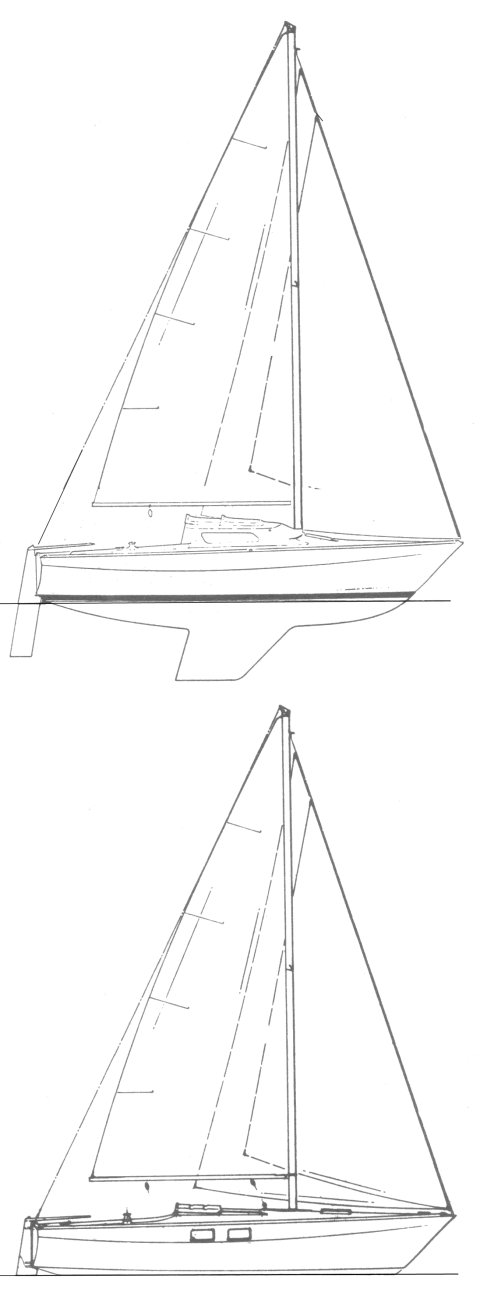
For a variety of reasons I monitor sailboats for sale in a few places and a 26-foot Haida in Washington State popped up on my radar today.

The thing is, back when I was living on a CAL 20, I lusted  for a flush deck Haida 26 that was for sale in the marina which had seduced me with the siren song of go-anywhere possibilities. In other words it was a pretty awesome boat.

The boat was everything my Cal 20 was but bigger and tough in a way that made the idea of sailing off to Hawaii and Japan a much more sensible proposition. However, as a starving film student it was just outside my budget.

Still, It's one of those boats I've always wanted and wonder how things would have turned out if I'd been able to scrape the needful purchase money together.

So, seeing a Haida for sale on Craig's List for only $750 really caught my attention and had me (for a few moments at least) considering buying a plane ticket to Seattle. Hey, it would be nice to have a Pied à l'Eau in the San Juans...

Sure it's a fixer upper and that's not a bad thing. Back in the days I was living on a Cal 20 in Sausalito I spent hours and hours working out how I'd fix up the Haida I was so enamoured with. The fact is that the Haida 26 is a very simple boat and at 26-feet there is actually very little to replace or fix so the cost of fixing it up would be fairly minor if you were doing the work yourself. 

Even having to buy an outboard for it I can't see it taking more than $1500 to put things right.

I recently saw a nice Haida going for $8900 so the fixer-upper VolksCruiser route makes a whole lot of sense if you're able to do it right.

Sadly, it's the wrong coast and time for me and a project for someone else in Washington State who I hope knows what a wonderful boat it is.

Sunday, October 24, 2021

An exercise in common sense and frugality...

I just realized that we've been using our DIY composting toilet without any issues or problems since 2009. which, if you do the math, adds up to twelve years. As it only cost around $100 that's a pretty good return on investment.

I mention this because the whole idea of VolksCruier is not about doing stuff on the cheap but more about coming up with better ways to do things while avoiding spending stupid money in the process.

Composting (and yeah, I know that composting toilets on boats don't really compost) toilets are a good example since they work better than MSDs, don't require holes in the boat, have near-zero maintenance, and can be built for next to nothing. Plus, I guess I should add that they don't smell as much as most MSDs.

For comparison, the only MSD I'd actually install on a boat I live on is the LAVAC which, in my opinion, is the best of the bunch. Of course, the LAVAC is a bit pricey at between $659-$780 plus the various needful bits not included (hose, holding tank, etc) add up to an installation that will run over a $1000 or so  and then there will be the ongoing cost of maintenance that in my experience works out to about $125 or so per year (seat seals and pump rebuild kits).

So, if I had installed a Lavac in "So It Goes" back in 2009 I'd expect to have spent at least $2500 to install and maintain it. Which, when compared to the total outlay for our composting head and the cost of peat moss/sawdust (maybe $100 over twelve years?) it would seem that we've saved $2300 or so by choosing the composting head with the added perq of never having to rebuild a fouled Henderson MK5 pump and replace gross nasty sewage hoses.

Which is a roundabout way of saying we chose the composting head because we thought it did a better job with the least potential problems or issues. The fact that it has saved us a couple of thousand dollars was really just a bonus.

Sunday, September 26, 2021

Avoiding the bigger/more expensive death spiral...

On, "So It Goes" we have  a 400-amp hour battery bank made up of lead acid golf cart batteries with 350-watts of solar panels being the prime charging input. I should also note that I have two 50-watt panels that I have not included as they currently need repair (so much for lifetime warranties) that I have not got around to fixing yet and the jury is still out on whether or not I can actually fix them.

I mention this because, like most cruising boats, "So It Goes" could use a kiss more power generation and storage. Now, the current group-think mindset where power is concerned is to simply throw out the existing system and replace it with new state-of-the-art components. Which would entail..

  • Throwing out batteries that have at least two years of remaining life.
  • Buying new batteries/charger of the Lithium sort.
  • Buying new solar panels.

Now, I'll be the first person to admit that new batteries and solar panels have some real advantages. for starters, as solar tech continues to improve the size to power ratio, it would enable me to have more charging watts with a smaller footprint which is a big advantage in deploying panels on a 50-year old 34-foot boat. New batteries with a bit more capacity would be no bad thing and, while I'm impressed with the claims of Lithium performance, I can't quite get past the fact that I have to replace every six-months the lithium battery that powers the computer I'm currently typing this on. 

The fact is that replacing the current system would, at best, be a small improvement to the overall system that actually works pretty well. As it stands and as lithium, as a system, is still in flux with several alternative systems waiting in the wings I think waiting a bit since prices seem to be coming down on both solar and batteries are concerned makes some sense.

So, how do we improve the system in the meantime?

More on that soonish...

Friday, September 10, 2021

On that "Just use less" mantra...

Way back when, Jimmy Carter pointed out that it might make sense to turn your thermostat down a few degrees and wear a sweater as a means to save on fossil fuels.

Which, as it happens, was a very simple and elegant answer to a difficult problem of the then current oil shortage.

Just use less.

Of course, Americans as a group wanted nothing to do with such a solution and the political output of the whole "Wear a sweater" was, at best, negative and just the sort of political grist that found Ronald Reagan as the next President of the US of A.

Which has exactly what to do with cruising and VolksCruisers?

Well, for me at least, Jimmy Carter's advice to use less, struck a chord with me and has been one of my favorite mantras where most things are concerned. Which, admittedly, does not fly well in the face of the current consumerist mindset of most folks on boats where the answer to most questions is to go bigger and spend large.

For example, the other day I was reading about a boat's new electrical system which was powerful enough to run a a village. When I costed out the huge solar array, 16K genset and gargantuan bank of lithium batteries, I came up with a sum that I could cruise lavishly on for the next few decades. Now, while I admittedly found the cost to be appalling, my main reaction to the electrical system was that it was over-complicated and had so many potential failure points that could seriously ruin their day/week/year that it was just a power failure waiting to happen.

Apparently, the reason behind the huge electrical upgrade was they'd kept bolting on more and more appliances/systems to the mix. Since they felt the need to expand and since they were adding power they might as well add on some more electron guzzling systems while they were at it which resulted in a death spiral as far as common sense was concerned.

Just maybe, at some point they could have just said to themselves...

"It's a boat so maybe we should simplify things a little and not set it up like a house on the grid. Yeah, maybe we could use a bit less."

Right now, adding a heater to "So It Goes" is currently on my "I really should do this" project list and it's easy to be seduced to the dark side of just throw money at it consumerism. While I'll admit that a central heating system is appealing but, then again, it's expensive as well as requiring an uptick in electrical consumption.Which would require another solar panel (or two) and a bigger battery bank and since we only have a 34-foot boat becomes somewhat problematic in the grand theme of things.

On the other hand, a small used solid fuel heater is fairly cheap as are a couple of sweaters and a I've already got some good sleeping bags for those extra chilly nights. So it would seem that I'll be taking President Carter's advice as it makes the most sense.

Support BoatBits

Tuesday, August 31, 2021

Almost ready to get started...

Over the last five years or so I've regularly watched a YouTube channel of a guy who's bought a boat and embarked in a restoration.

On one hand it's been very entertaining as the guy in question makes good shows and does a better than most exposition of how to do stuff. While on the other hand it was interesting as he tended to make a lot of mistakes and was pretty forthright in letting you know about them.

What has been less enjoyable is the ongoing mission creep his restoration has gone through and as his popularity and income have increased the way it's become something of a consumerish cornucopia of installing the best and most expensive stuff he can find.

Which, I'll admit, is just fine where he's concerned and of course he has the right to spend as much money as he can afford doing his boat the way he wants to. But, for me, the problem is that they don't call youtubers "influencers" for nothing and it sends a message that the answer to most all issues where boats are concerned is more stuff more money. 

But, That's not how we roll here.

Since I've mentioned that I'm about to start building another self-steering gear I've received no shortage of emails telling me that folks are looking forward to some in-depth coverage of how I'm doing it. Then again, there's been quite a few folks telling me I'm an idiot because you need to spend over $5K to get a decent self-steering gear and that you get what you pay for and I expect you all know how much the "You get what you pay for" thing really gets up my nose.

I now have almost all of the materials needed for the Self-steering build and it looks like the total out-of-pocket expenses will not exceed $350-dollars. The good news is, at worst, it will be as good as an Auto-helm self-steering gear ($5250) and, more than likely, will work considerably better.

So, more on the self-steering ASAP...


Monday, August 23, 2021

It's almost boat show time...

This is about the time of year I perk up and pay attention to the various and sundry pre-boatshow press releases as there are usually some interesting bits of information on where boat design is going.

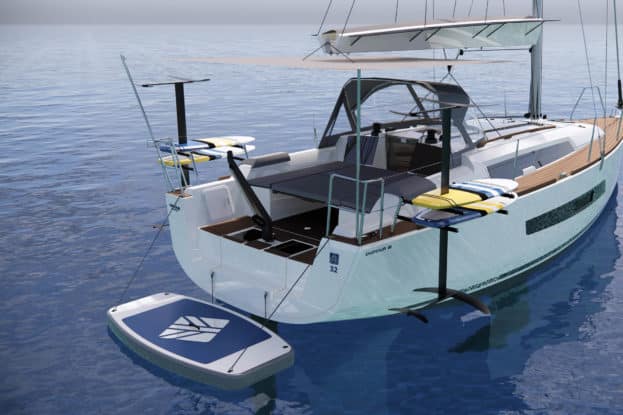
Take this new boat from Dufour...


It's the smallest boat in the Dufour line which in itself is interesting but the inflatable transom thingy certainly caught my attention.

Whatever it is it is most certainly a bit out of the box and most certainly bears looking into.

By the way, I'm well aware that a new Dufour, no matter how small, is not going to be a potential VolksCruiser until it's at least ten years older and on the used market. So, why the hell am I interested now?

Mostly mostly it's all about new ideas. Boat shows are full of interesting features and (dare I say it?) cunning plans. Some wind up being pretty useless or dumb but a few are real improvements and a minute number become real game changers.

Offhand, I don't think the inflatable transom thingy is a game changer but it is an out-of-the-box idea that could easily be reverse engineered, DIY'd, and retrofitted to a VolksCruiserish boat. 

Which for me makes boat shows and the press releases leading up to them a wonderful source of ready to be purloined ideas that just might make a big difference in the performance or livability of your old classic plastic design.

Need I say more?


Saturday, August 7, 2021

Why I'm building the B&B self-steering design...

The idea of self-steering is, for all practical purposes, a pretty simple concept and most all self-steering systems reflect that. Or at least the good ones do.

The problem with the idea of home building a self-steering gear, for most people at least, is that they tend to have a certain amount of mechanical parts which tend to be just a little bit fiddly to construct and sourcing various fiddly parts is more than just a little problematic.

Some time ago, I designed a self-steering gear that, with the exception of the auxiliary rudder and trim tab, consisted of off-the-shelf items made by a single company which made sourcing the "fiddly" bits simple, cheap, and required zero machining or welding. The downside of the design was that as soon as I started to sell plans for the self-steering the company that made the fiddly bits was absorbed by another company who's first decision was to discontinue sales of the parts in my design. Bummer.

Since then, I've pretty much advised folks interested in building their own self-steering gear to do what I do and just build a clone of the Auto-Helm gear as it is dead simple, has a minimum of "fiddly" bits, fairly cheap to build and works very well on just about any boat.

A little over a year ago one of my favorite sources of dinghy plans, B&B, mentioned that they were currently working on a DIY self-steering gear and, looking at the available information at the time, I said to myself that it's pretty much a clone of the Auto-Helm but noticed one big difference...

The B&B rudder was not mounted to the transom but to a "rudder post" that allowed the rudder to kick up in the event of hitting something. Better yet, the rudder post also lets you raise the rudder out of the water if you needed to motor in reverse (an issue for auxiliary rudder systems) or just stow the self-steering gear upside down above the transom when not needed. A small but truly brilliant improvement.

Now, I'll admit, my first thought was to simply build my normal Auto-Helm clone and just purloin the rudder post idea but, since the plans were only $50 bucks and in my view the rudder post idea was easily worth more than that, I decided to just buy the plans.

Now that I've actually received the plans I'm glad I did because they are excellent as well as incredibly detailed and pretty much tyro proof. Obviously B&B has sold tons of dinghy plans and in the process they've learned  how to design plans that are easy to build. The plans are actually more than enough to build the gear but they also include a "Builders Guide" which goes that little bit further to answer any possible questions one might have in the how or why things go together.

At the moment they have three sizes of Windvane self-steering gears, the Rover, Nomad, and Wayfarer which are size appropriate to fit most any boat you might have. In our case we're going with the Wayfarer...

So, that's the self-steering I'm about to start building and hope to get into it in the next week or so, "H" season willing. There are three potential storms heading our way as I write this.


Friday, August 6, 2021

Almost time to get to doing...

A quick update on the self-steering project. I now have all the various bits on island with the excepting of the needful wood which is just a dinghy row away.

So, hopefully, in the next few days I'll be getting the wood for the project along with a few sheets of plywood for a new dinghy build and be able to sort out the actual cost.

More about the actual self-steering design tomorrow...

Monday, July 26, 2021

Getting ready to build a new self-steering gear...

So, yeah, about that new self-steering gear...

Right now I'm in the process of getting all the bits together to assemble a kit to build the it and the various pieces not readily available on a tropical island paradise are, mostly, currently winging their way to my PO box.

Putting together a "kit" before starting just about any boat project in my opinion is a must because when I do a project I like to do it full on and as non-stop as possible. Having all the needful bits in hand means you don't have to waste time running momentum killing errands.

Another advantage of putting together a kit for your project is that it forces you to get familiar with how it all goes together before you actually get to doing the actual work. Building projects in your head is a great way to see where problems may crop up and sort out workarounds and improvements to the mix. For instance, one part of the design bothered me because I don't enjoy tapping stainless steel rod and while going over the plans again and again while looking at suppliers catalogs I had a serendipitous moment where I came across an easy replacement method to get way from tapping rod which also makes the windvane simpler, offers easier adjustment, and saves some money in the process.

Lastly, done right, putting a kit together tends to save a significant amount of money while allowing a better quality of components. Just buying the various fasteners for the project off island saves me close to a couple hundred dollars compared to the silly pricing of stainless screws and bolts.right now I'm looking at a budget of around $350 for the complete self-steering gear but, when the gear is complete I'll be publishing all the various costs so we'll see how my current estimate holds up once the actual gear is complete.

Next up on the subject is why a chose this particular self-steering gear to build...